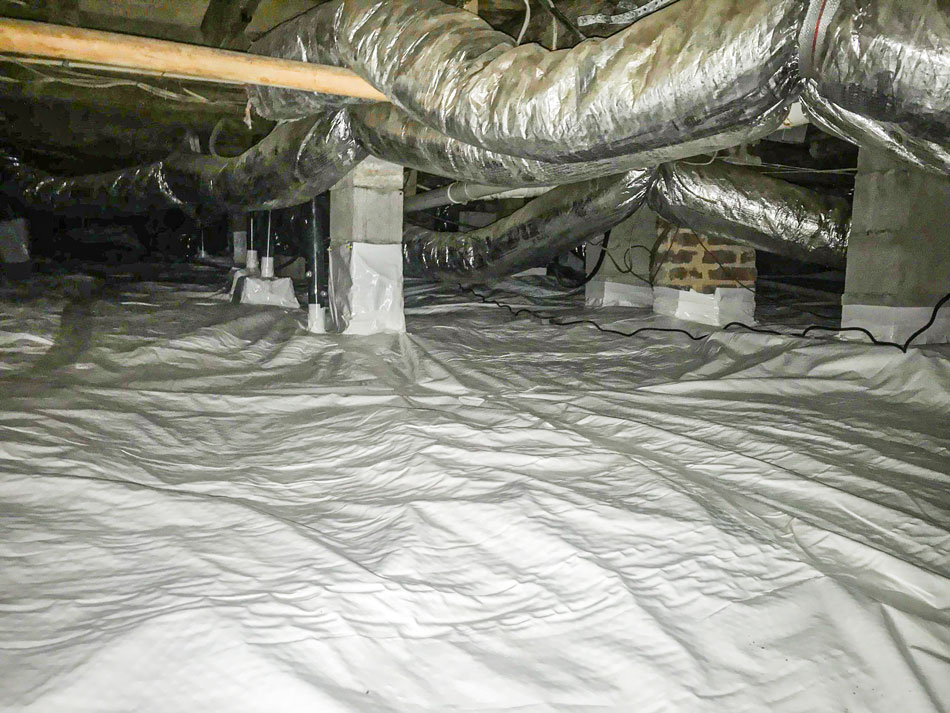
A crawlspace is ground zero for a home’s moisture and mold problems, and most of what goes wrong down there traces back to how it was built or last “fixed.” Mark Clymore has been in construction since 1985, so he treats encapsulation as a structural job, not a spray-and-go. The goal is a truly conditioned crawlspace that holds humidity below the 55% threshold mold needs to grow — sealing your home off from the damp, the pests, and the wood rot that follow it.
Done right, encapsulation has a clear order of operations. First, the clean-out: Mark hauls out the construction debris, trash, and rocks left behind by builders or prior contractors, then levels the dirt flat so the vapor barrier can lie flush with the earth — no gaps for moisture to hide in. Next, he pulls any contaminated fiberglass insulation rather than treating around it, because fiberglass traps mold spores. Finally, he seals the perimeter vents, lays a premium vapor barrier across 100% of the earth, and sizes a professional dehumidifier to the space — turning a damp, vented crawlspace into a sealed, conditioned one.
A large share of the air on your main floor is pulled up from the crawlspace — so damp, moldy air below becomes the air your family breathes above. By sealing the space and holding it below 55% humidity, encapsulation cuts mold off at the source and noticeably improves the air quality in the living space overhead. It also stops the wood rot and pest pressure that an open, humid crawlspace invites.
A properly conditioned crawlspace holds humidity below the 55% mold needs — which means cleaner air upstairs, no more mold or wood rot below, lower energy bills, and protection for your home’s structure. The key word is “properly”: those benefits only hold if the space is cleaned out, leveled, and sealed correctly.

Most crawlspaces take a day to a few days, depending on size and how much debris and contaminated insulation has to come out first. Mark gives you a firm timeline after he inspects the space.
It depends on the size and condition of your crawlspace, but Mark’s pricing is fair by design — high-grade vapor barrier runs about $1.50 per square foot versus the ~$2.00 industry average, with no franchise overhead padding the bill. You’ll get an inspection and a clear estimate before any work begins.
Because Mark runs a lean operation and does the work himself, his crawlspace pricing comes in fair — high-grade vapor barrier runs roughly $1.50 per square foot, versus the ~$2.00 industry average. He’ll also encourage you to get three quotes and help you read them; a builder can tell when an encapsulation bid is padded, or when it skips the clean-out and leveling that actually make the job last. Serving Atlanta and Gwinnett County, Clymore Mold gives you a properly conditioned crawlspace — not a plastic liner thrown over a mess.
Assurance of Privacy:
Your privacy is important to us. Rest assured that the information you share in this form will be used solely for communication purposes related to your mold remediation inquiry. We do not share your personal information with any third parties.