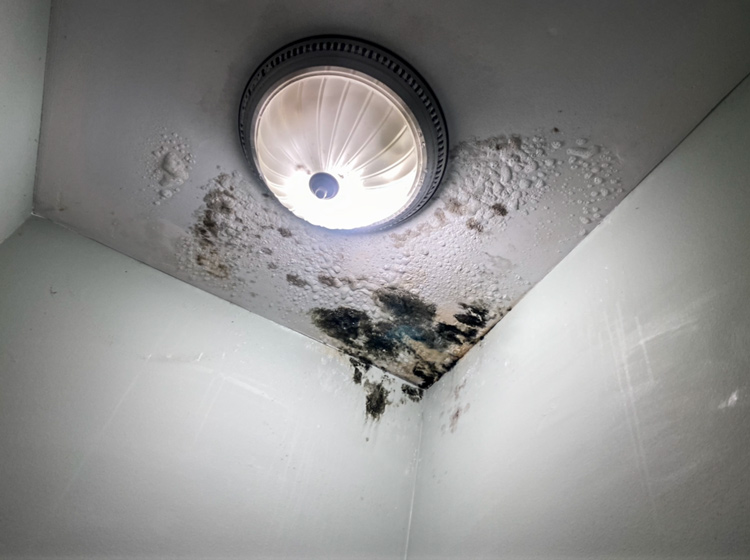
Mold Remediation That Fixes the Cause — Not Just the Symptom
Most “mold problems” are really moisture problems. Mold spores are already dormant on the lumber, drywall, and insulation in nearly every home — they only wake up and spread once relative humidity climbs past 55%. So when a crew scrubs the surface and leaves without solving why the moisture was there, the mold comes back. At Clymore Mold, owner Mark Clymore has worked construction and carpentry since 1985, bringing that builder’s eye to every job: he personally diagnoses the moisture source, does the physical work himself, and conditions the space to hold humidity below that 55% threshold so the problem stays gone.
Surgical Remediation: Treat the Mold, Not Your Whole Kitchen
When mold turns up behind a vanity or under kitchen cabinets, most companies reach for a sledgehammer. Their “demolition-first” approach tears out vanities, countertops, and entire matching cabinet sets to reach a small patch of affected drywall — and the reconstruction bill alone can run $10,000 or more.
Mark works differently. Drawing on a cabinetry and remodeling career dating to 1985, he uses surgical remediation: cutting out and replacing only the affected structural backing and drywall behind the cabinets, treating the mold thoroughly, and rebuilding the backing cleanly — without disturbing your plumbing and drain lines, destroying matching cabinetry, or forcing an unnecessary remodel. A job a franchise might quote as a five-figure rebuild is typically handled for around $1,600.
We Diagnose the Moisture First
Every remediation starts by finding the water. Mark begins with a thorough visual inspection, collecting air and surface samples to identify the type and concentration of mold present. From there, he traces the actual source — a hidden leak, poor ventilation, a crawlspace humidity problem — and corrects it. Only then does he treat the affected materials and condition the space to hold humidity below 55%. Skipping that last step is why so much “remediated” mold returns within a year.
Clean Air, Not Just Clean Surfaces
Mold isn’t only a surface problem — airborne spores are what trigger the allergies, asthma flare-ups, and respiratory irritation families actually feel. Every remediation Mark performs includes air-quality testing and purification, so what you breathe afterward is genuinely clean, not just what you can see.
Honest Pricing — and Why You Should Get Three Quotes
We actually encourage you to get three quotes. Mark runs a lean, low-overhead operation — no franchise fees, no corporate markup — so his pricing lands fair and often well under the big names. More importantly, his construction background lets him read the other quotes: when a “certified” remediation bid is over-scoped — calling for demolition and reconstruction that ignore the real structural moisture source — he’ll point it out. You deserve to know whether you’re paying to fix mold, or paying to rebuild a kitchen that never needed rebuilding.
Mold remediation involves assessing and treating mold-infested areas, addressing the root causes of mold growth such as moisture or lack of ventilation, and taking measures to prevent future mold growth.
Post-remediation, it’s crucial to manage humidity levels, ensure proper ventilation, promptly address water leaks or dampness, and regularly clean and maintain your property.
Yes, we provide guidance and tips on maintaining a mold-free environment after our service, ensuring you have the resources to prevent future mold growth.
Clymore Mold Remediation - Your Best Defense Against Mold
With Clymore Mold, you get more than a quick surface cleanup — you get a master builder who finds the moisture source, fixes it at the structure, and shows you how to hold humidity below 55% so the mold doesn’t return. Serving Atlanta and Gwinnett County, Mark Clymore handles your mold problem honestly, surgically, and at a fair price. Reach out and talk to the person who’ll actually do the work.
Tell Us About Your Mold Problem
Your Privacy Matters
Assurance of Privacy:
Your privacy is important to us. Rest assured that the information you share in this form will be used solely for communication purposes related to your mold remediation inquiry. We do not share your personal information with any third parties.